
One of the most common questions we hear is why a modernisation programme can look strong on paper but still stall in delivery. In many cases, the blocker is not device readiness, policy design, or cloud management. It is the application layer.
Legacy application packaging becomes the delivery bottleneck when applications are undocumented or tied to old install logic. It also becomes the bottleneck when applications depend on missing source media or are difficult to validate against modern endpoint platforms. This article looks at why that happens, what AI agent-based packaging changes, and where the operational return usually appears first.
Why legacy app packaging slows everything down
Legacy Windows applications are rarely clean, documented, or ready for modern endpoint management. Many rely on custom install logic, outdated prerequisites, hard-coded paths, local services, registry changes, or source media that no one can easily locate. That makes packaging slow, specialist work.
In many environments, manual packaging can cost between £300 and £900 per application. The effort is not just creating a wrapper. Teams often need to reverse-engineer installer behaviour, identify hidden dependencies, and test remediation routes. They also need to handle silent install failures and prove that the resulting package works across the target estate.
Multiply that across a migration programme and delays stop being occasional. They become structural. Windows 11 migrations, Intune adoption, cloud endpoint strategies, virtual desktop projects, and Evergreen IT models all depend on applications being delivered in a supportable format.
What AI agent-based packaging changes
AI agent-based packaging is not simple scripting. It applies discovery, pattern recognition, and context-aware decision-making to a delivery problem that has traditionally relied on manual investigation.
Platforms such as EtherApps Forge are built around this model. They combine application discovery with packaging intelligence, known remediation paths, capture workflows, and guidance on the most suitable route to deployment.
That does not remove the need for packaging expertise. It gives packaging teams a stronger starting point, better recommendations, and more repeatable outputs.
In practical terms, three areas improve quickly:
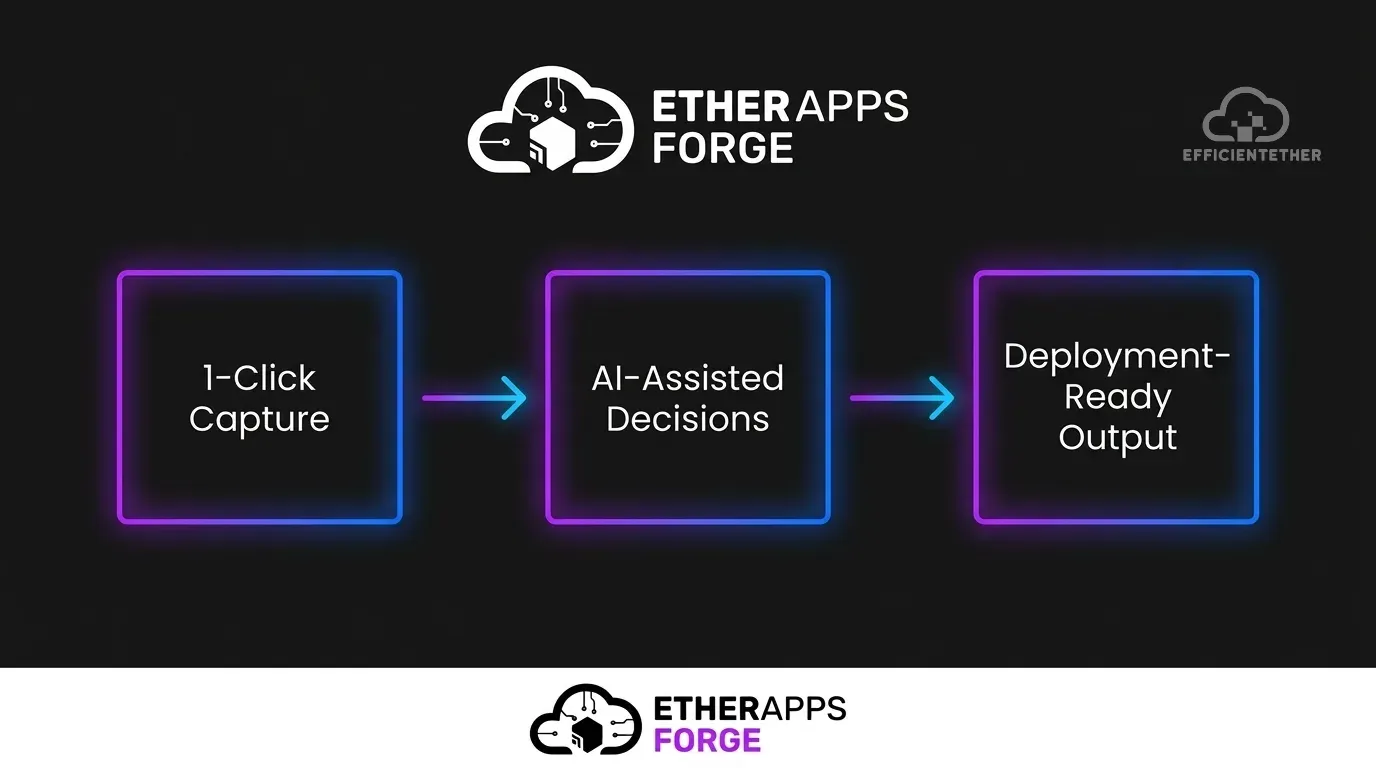
- Intelligent discovery: The platform analyses application behaviour, files, registry keys, AppData, services, dependencies, and install patterns to build a clearer packaging baseline.
- Assisted decision-making: Teams can identify whether an application is better suited to MSI, MSIX, IntuneWin, App Attach, or another delivery route using packaging signals rather than trial and error.
- Deployment-ready output: The process moves beyond analysis and helps create packages aligned to modern management platforms such as Microsoft Intune.
Where the ROI shows up first
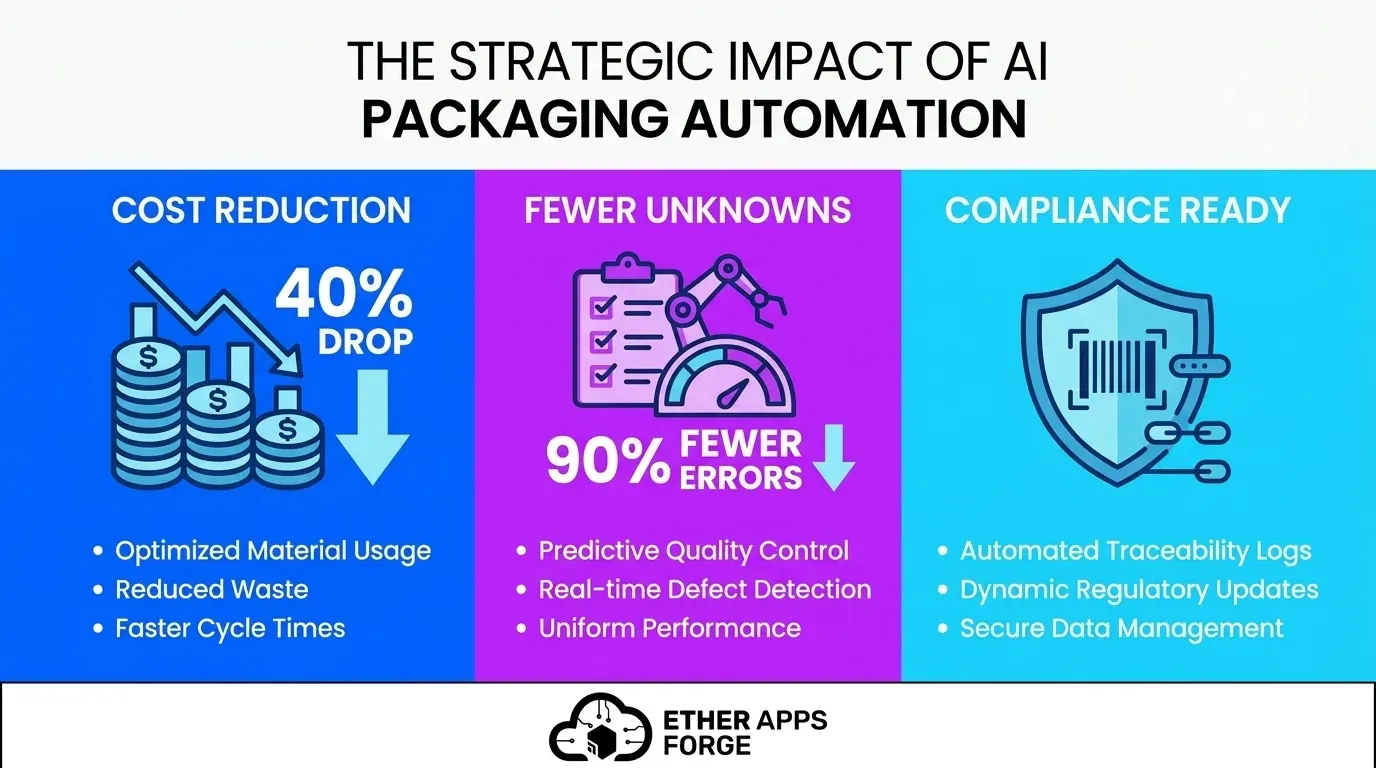
The first gain is reduced uncertainty. Packaging teams lose time to undocumented switches, failed installs, custom actions, sequencing issues, and hidden dependencies. AI-guided packaging reduces that guesswork and gives engineers a more stable starting point.
The second gain is cost. When discovery, capture, remediation guidance, and packaging decisions become more consistent, per-application effort drops. In well-governed environments, that is where meaningful cost reduction starts to become realistic.
The third gain is sustainability. Evergreen IT depends on repeatability. If every application update requires a manual repackaging cycle, scale disappears quickly. AI-assisted packaging reduces rework and helps teams keep pace with continuous change.
How it helps stalled migration projects move again
Application delivery is often the last blocker standing. Organisations may have the target endpoint strategy, management platform, security model, and migration plan agreed, but the project still waits on difficult apps.
AI agent-based packaging helps teams start with the applications that create the most delay. These typically include missing installers, inconsistent install behaviour, poor documentation, complex dependencies, and applications that have failed earlier packaging attempts.
Instead of treating each application as a blank investigation, teams can work from a clearer baseline. They can then validate the recommended route and move the highest-risk apps into a repeatable packaging flow.
What still needs human review
AI reduces friction, but it does not remove engineering judgement. Outcomes vary based on installer quality, source media availability, application complexity, testing scope, signing requirements, deployment targets, and customer-specific standards.
The strongest model is controlled automation with human validation. Packaging engineers still decide what is acceptable, review exceptions, confirm test evidence, and approve rollout readiness.
The bottom line
Modernising complex Windows applications no longer needs to mean months of manual capture, repeated troubleshooting, and delayed migration projects. AI agent-based packaging gives IT teams a faster way to discover, assess, and convert difficult applications into modern deployment formats.
The practical conclusion is simple: fewer unknowns, lower packaging effort, and a more repeatable route to modern application delivery.
Start with the most problematic applications in the estate, validate the results, and scale from there. To model the potential return, use the EtherApps Forge ROI calculator, explore agentic application packaging, or try EtherApps Forge. Once the packaging decision itself is easier, the harder question becomes whether the packaging operation can execute consistently at scale.